Thermowood, explained
The dark, dimensionally stable timber you see on modern outdoor saunas isn't stained or treated. It's cooked. Here's what that means and why it lasts.
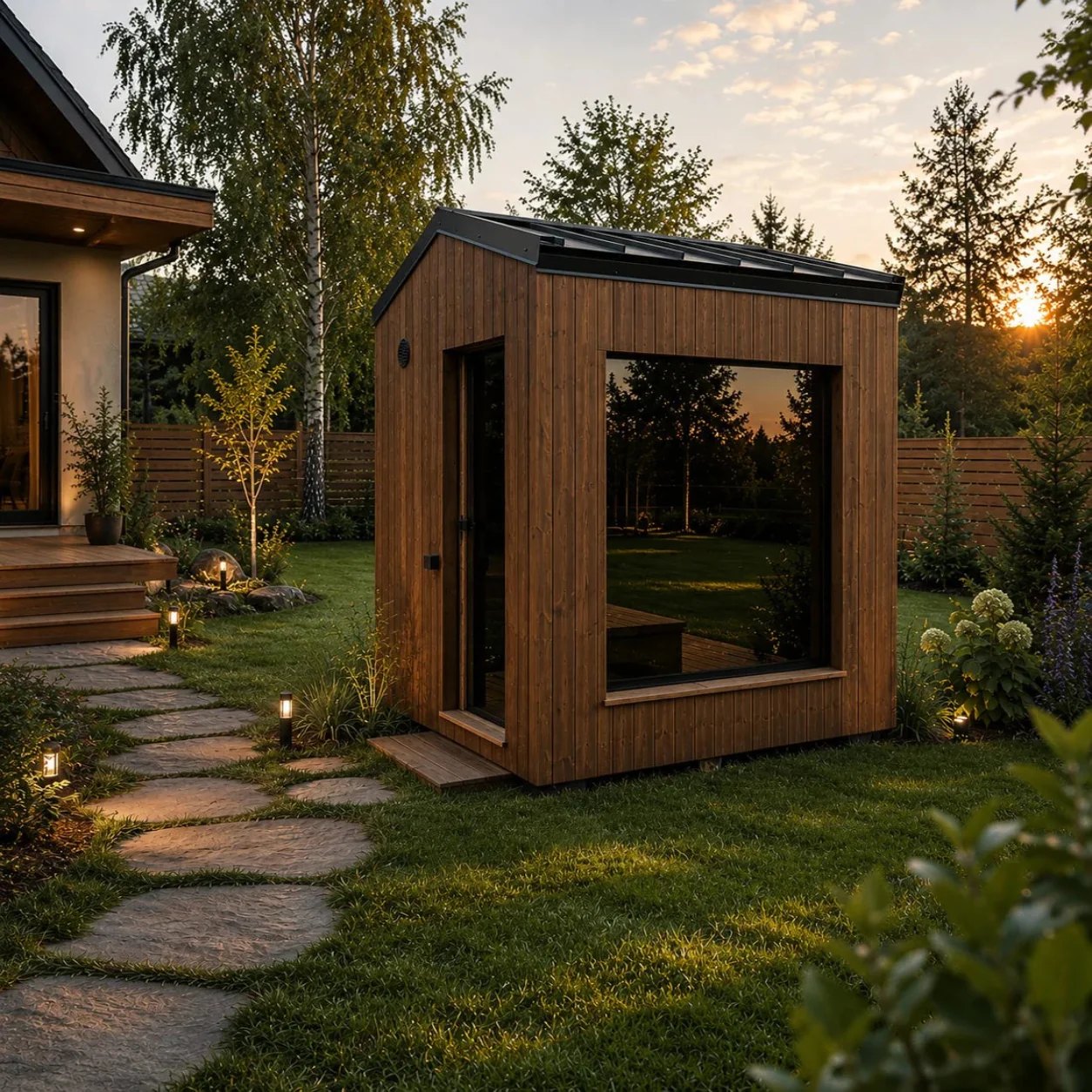
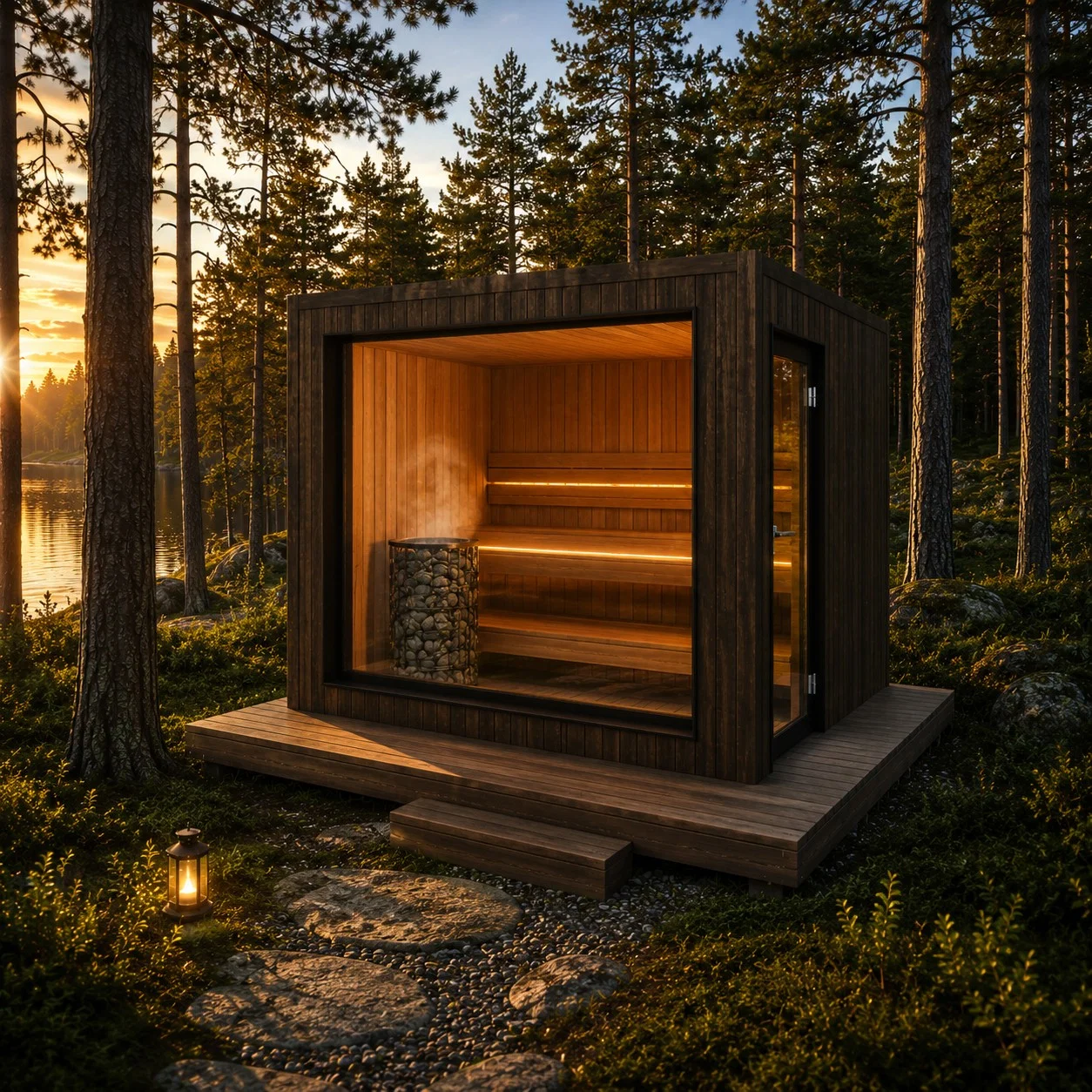
If you have looked at outdoor saunas lately you will have noticed a lot of warm, chocolate-brown timber. It is tempting to assume it has been stained that colour. It hasn't. That tone comes from the wood itself, and it is the visible sign of a process that changes how the timber behaves for the rest of its life.
What thermowood actually is
Thermowood — thermally modified timber — is ordinary softwood, usually spruce or pine, that has been treated with nothing but heat and steam. The boards are heated to somewhere around 180–215 °C in a controlled, low-oxygen kiln over a day or more. No preservatives, no chemicals, no pressure-injected salts. Just temperature and time.
What comes out is a different material from what went in. The heat drives out moisture and breaks down the sugars and resins in the wood that fungi feed on and that make untreated timber swell, shrink and warp with the seasons.
Why it matters for a sauna
A sauna is one of the most demanding places you can put a piece of wood. It swings from cold and damp to hot and dry, over and over, for years. Untreated timber hates that. Thermowood is built for it:
- Dimensional stability. With the sugars and much of the moisture-holding capacity removed, the wood moves far less. That means fewer gaps, less cupping and cladding that stays flat and tight.
- Rot and decay resistance. Take away what the fungi eat, and the wood resists decay without any chemical preservative — which matters in a room you sit in and breathe deeply.
- Low resin. The heat crystallises and removes resin, so the timber won't weep sticky sap when it gets hot. Important on any surface near a heater.
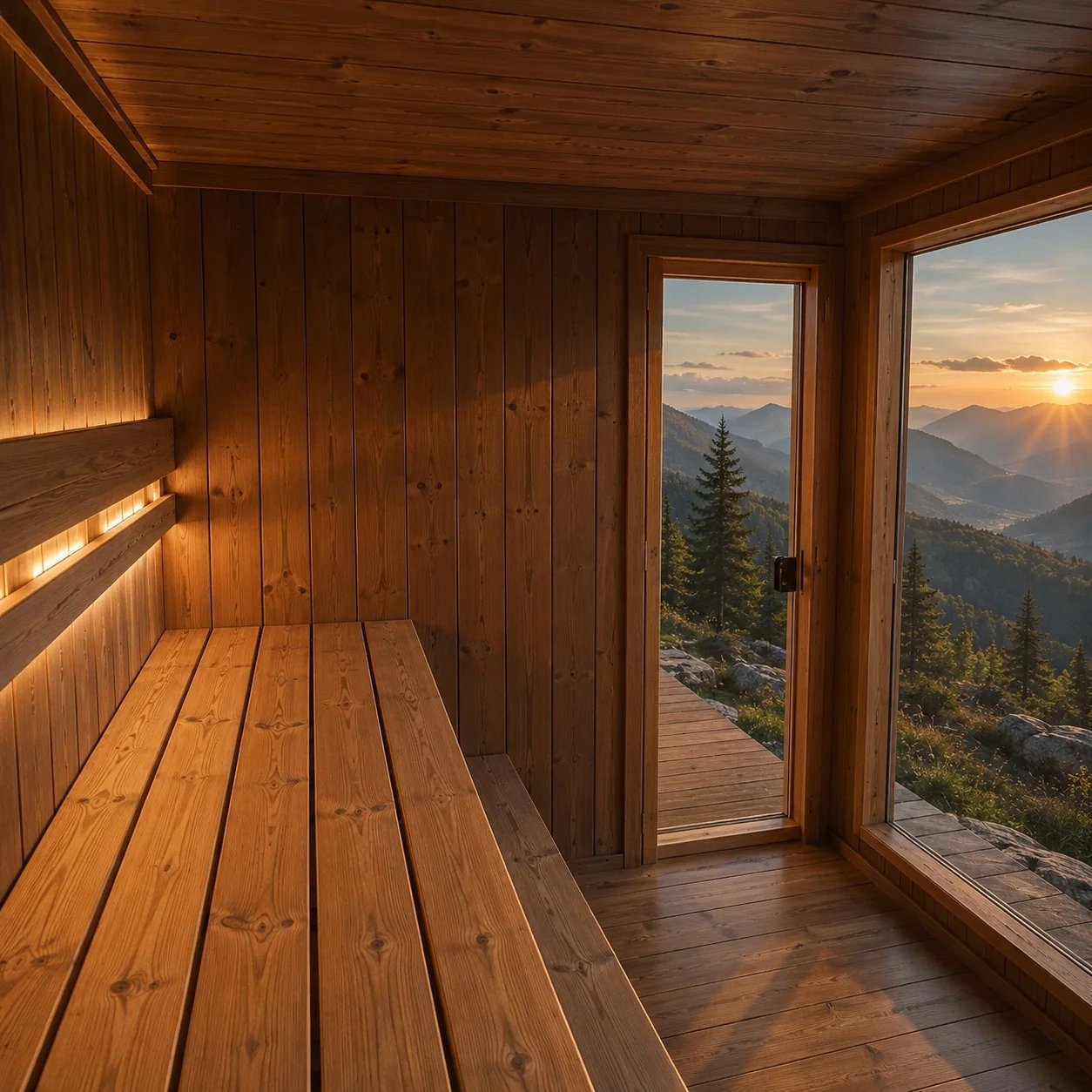
- That colour. The rich brown runs right through the board, not just on the surface, so scratches and cut ends don't show pale.
The trade-offs, honestly
Thermal modification makes wood more brittle than its untreated form, so it is a cladding and lining material rather than a structural one — you won't see it holding up a roof. And like all wood left outdoors, the surface will silver over time as UV does its work, unless you oil it. That greying is cosmetic, not decay; many owners come to prefer the weathered look.
It is also worth saying that thermowood is a premium material, and it costs more than untreated cladding. What you are paying for is decades of stability in a setting that punishes lesser timber — and the fact that it does the job without a single chemical.
Caring for it
Outside, a coat of pigmented wood oil once a year or two keeps the brown tone and slows the silvering. Inside, sauna benches and walls are best left bare or treated only with a dedicated paraffin-based sauna oil — never a sealing varnish, which would trap heat and blister. A quick wipe-down and good ventilation after use is most of the maintenance a sauna interior ever needs.
Thermowood is one of those quiet material choices that you never think about again once it's made — which, for something that lives outdoors through a Nordic winter, is exactly the point.