Electric or wood-fired: choosing a sauna heater
The heater sets the character of the whole sauna — the heat-up time, the feel of the steam, and how much of a ritual the thing becomes. Here's how to decide.
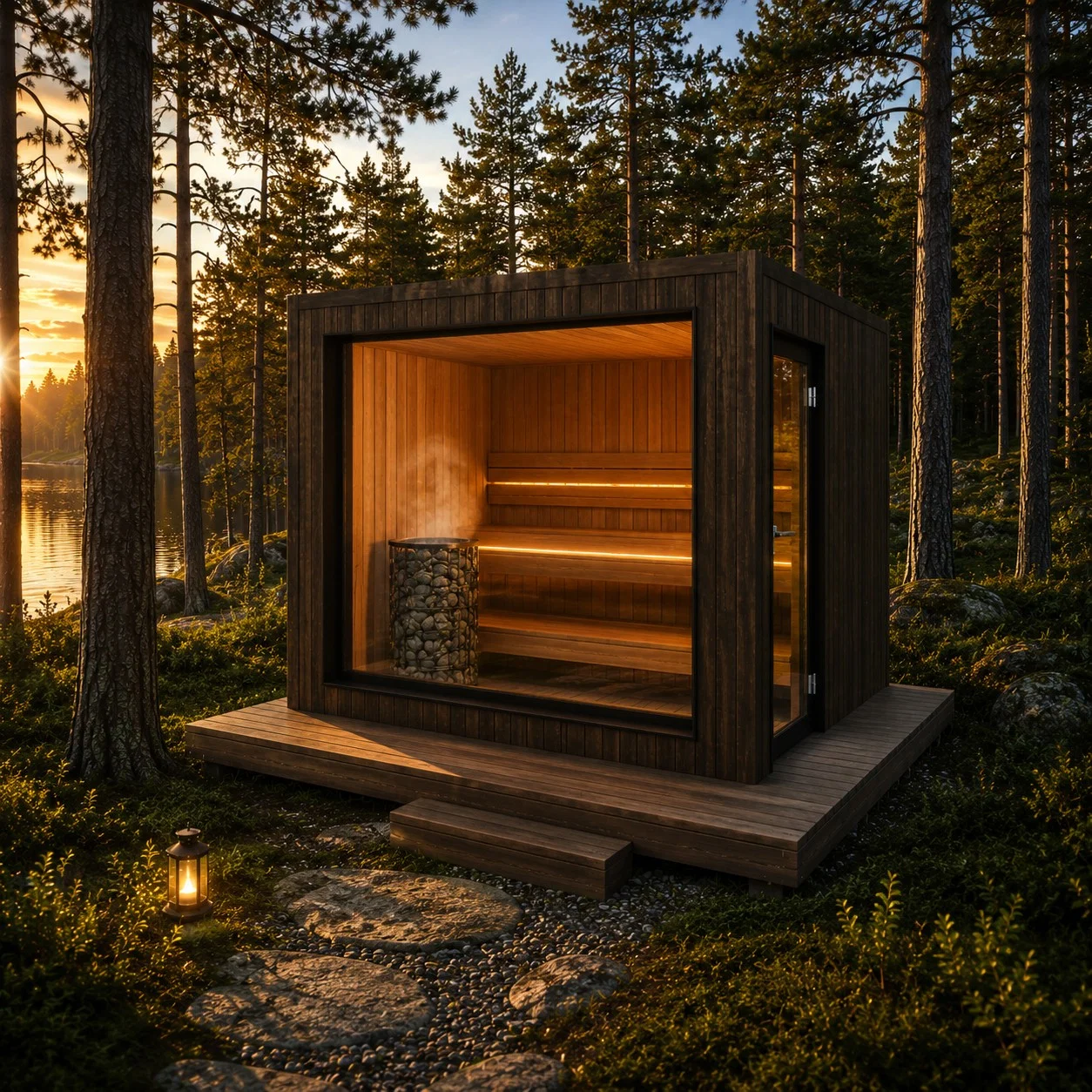
Every other choice in a sauna — the size, the glazing, the benches — is a matter of taste. The heater is a matter of temperament. It decides whether your sauna is something you flick on after work, or something you build towards on a Sunday. Both are right. It just depends who you are.
Electric heaters
The default for most modern saunas, and for good reason. An electric heater is a box of heating elements topped with a bed of stones. You set a temperature, it gets there, and it holds it. That's the whole story — and the convenience is the point.
Where electric wins
- Ready in 30–45 minutes from cold, with no tending. On a wall timer or app, it can be hot before you've changed.
- Precise, steady heat at whatever temperature you set, with no babysitting.
- No flue, no ash, no wood store. It suits indoor saunas, small gardens and anywhere a chimney isn't practical.
- Throw water on the stones for löyly — that soft wave of steam — exactly as you would on any sauna.
The trade-off is that it needs a suitable electrical supply. Anything above a small cabin heater usually calls for a dedicated high-power circuit installed by an electrician, so factor that into the plan.
Wood-fired heaters
A wood-burning stove is the original sauna heater, and for many people nothing else will do. You lay a fire, light it, and feed it while the room comes up to temperature. It asks more of you — and gives more back.
Where wood wins
- The quality of the heat. Enthusiasts describe wood heat as softer and more enveloping, with a bigger, gentler steam off a larger stone bed.
- The ritual. The crackle, the smell of woodsmoke, the half hour of tending — for a lot of people that is the sauna, not a means to it.
- Off-grid freedom. No power supply required, which makes it the natural choice for a lakeside cabin or a remote plot.
In return it asks for a flue and safe clearances, a dry store of wood, a little skill to run well, and the willingness to clean out ash. Many local rules also govern chimneys and installation — worth checking early. None of this is difficult; it's simply a relationship rather than a switch.
A quick way to decide
Ask yourself one question: is the sauna a destination or a utility?
- If you want heat on a weeknight with zero fuss, and especially if the sauna is indoors or power is easy to run — choose electric.
- If the making of the heat is part of what you're there for, and you have the space and the setting for a flue — choose wood.
Whichever way you lean, the stones on top do the real work — they hold the heat and turn a ladle of water into steam. A generous stone mass is what separates a sauna that merely gets hot from one that feels alive. It's the first thing we look at when we help you spec a model.